
Quick links
If you’re island hopping through Southern Thailand, you’ve probably wondered about the best way to get from Phuket to Ao Nang. These two stunning destinations are among the most popular spots in the region, and while they’re relatively close as the crow flies, the journey involves some interesting logistics. Whether you’re chasing the limestone cliffs of Railay Beach or the vibrant nightlife of Ao Nang’s main strip, understanding your ferry options will make your trip so much smoother. Let’s dive into everything you need to know about making this journey across the Andaman Sea.
Understanding the Phuket to Ao Nang Route
The phuket to ao nang ferry route isn’t as straightforward as hopping on a boat and arriving in a couple hours. Geographically, these destinations sit on different parts of Thailand’s spectacular coastline, with Ao Nang located in Krabi Province while Phuket is an island unto itself.
The actual distance between Phuket and Ao Nang is roughly 40-50 kilometers depending on your exact departure and arrival points. However, ferry services don’t always operate as direct point-to-point connections. This is where planning becomes essential.
Direct Ferry Services
Here’s the thing about direct ferries: they’re seasonal and schedule dependent. When available, the Ao Nang Princess Ferry operates during high season (typically November through April) and provides one of the few direct water connections between these destinations.
The ferry typically departs from Rassada Pier in Phuket and arrives at Nopparat Thara Pier near Ao Nang. For travelers looking for detailed schedules and booking information about ferry options between Phuket and Ao Nang, checking current timetables is crucial since these change annually.

Key ferry details:
- Journey time: approximately 2-3 hours
- Departure frequency: usually 1-2 times daily during high season
- Typical departure time: mid-morning (around 9:00-10:00 AM)
- Return journey available: afternoon departures from Ao Nang
Speedboat Alternatives Worth Considering
If the ferry schedule doesn’t match your plans, speedboats offer a faster alternative. These zippy vessels cut travel time significantly, though they come with their own considerations.
Speedboat services from Rassada Pier in Phuket can reach Ao Nang in about 45 minutes to 1.5 hours, depending on sea conditions and stops. The speed comes at a premium, naturally, but for travelers on tight schedules, it’s often worth the extra baht.
| Transportation Type | Duration | Typical Price Range | Best For |
|---|---|---|---|
| Standard Ferry | 2-3 hours | 400-700 THB | Budget travelers, scenic journey |
| Speedboat | 45 min - 1.5 hours | 800-1,500 THB | Time-sensitive trips |
| Combination (Van + Ferry) | 3-4 hours | 500-900 THB | Flexibility, year-round availability |
| Private Charter | 1-1.5 hours | 8,000-15,000 THB | Groups, convenience |
Weather and Sea Conditions
The Andaman Sea can be moody, especially during monsoon season (May through October). During these months, many ferry operators reduce frequency or suspend services entirely due to rough seas.
What you need to know:
- High season (November-April): Calm seas, regular schedules
- Shoulder season (April-May, October): Variable conditions
- Low season (May-September): Limited services, possible cancellations
Always check weather forecasts before booking, and build flexibility into your itinerary. Sea conditions can change rapidly in the Andaman.
The Combined Van and Ferry Option
Here’s where things get creative. Many travelers don’t realize that combined transport options often provide the most reliable year-round solution for the phuket to ao nang ferry journey.
This option typically involves a van ride from your Phuket location to a pier (often Rassada Pier), then a ferry or boat crossing, followed by another van transfer to your final destination in Ao Nang. While it sounds complicated, operators handle everything seamlessly.
The comprehensive guide to Phuket to Ao Nang transportation breaks down these combination routes in detail, showing how different operators coordinate multi-modal journeys.
Benefits of Combination Routes
You might wonder why anyone would choose a combination option when direct ferries exist. Here’s the reality: combination routes often win for practicality.
Advantages include:
- Year-round availability (not just high season)
- Door-to-door service from hotels
- Guaranteed connections between transport segments
- Better luggage handling compared to juggling transfers yourself
- Backup options if weather affects one segment
The whole journey takes about 3-4 hours total, which is surprisingly competitive when you factor in getting to and from piers on your own.

Booking Your Ferry Tickets
Gone are the days of showing up at the pier and hoping for space. In 2026, advance booking isn’t just recommended, it’s pretty much essential during peak travel months.
Online Booking Platforms
Several platforms make booking straightforward, but not all are created equal. You want a service that offers real-time availability, supports multiple languages, and provides instant confirmation.
Thailand Boat Tickets simplifies the entire process through an AI-powered booking system. You can inquire about schedules and book tickets through WhatsApp, Instagram DM, Facebook Messenger, Telegram, LINE, or the website directly. It’s particularly helpful for travelers who prefer messaging over navigating traditional booking websites.
When booking any phuket to ao nang ferry service, look for these features:
- Transparent pricing (no hidden fees at checkout)
- Flexible cancellation policies (weather happens)
- Multi-language support (essential for international travelers)
- Mobile tickets (easier than printing)
- Customer support (ideally in multiple time zones)
Timing Your Booking
How far in advance should you book? It depends on when you’re traveling and your flexibility level.
- High season (Dec-Feb): Book 1-2 weeks ahead minimum
- Shoulder season: 3-5 days is usually fine
- Low season: Can often book 1-2 days before
- Holidays and festivals: Book as early as possible
Last-minute bookings are risky during peak periods. Ferries fill up, especially on popular routes connecting major destinations like Phuket and the Krabi region.
Departure Points and Piers
Understanding where you’ll actually depart from in Phuket matters more than you might think. The island has several piers, and not all serve the Ao Nang route.
Rassada Pier (Main Hub)
Rassada Pier is your primary departure point for most Ao Nang services. Located on Phuket’s east coast, it’s about 10-15 minutes from Phuket Town and 45 minutes from Patong Beach.
Getting to Rassada Pier:
- Taxi from Patong: 400-600 THB
- Grab/Bolt app: Usually cheaper, 300-500 THB
- Hotel transfer: Often included with combination tickets
- Public bus: Available but requires transfers
Arrive at least 30 minutes before departure. The pier has basic facilities including a 7-Eleven, toilets, and waiting areas, but don’t expect airport-level amenities.
What to Expect at Ao Nang Arrival
On the Ao Nang side, ferries typically arrive at Nopparat Thara Pier, which is about 3-4 kilometers from the main Ao Nang beach area. Songthaews (shared taxis) and taxis wait at the pier, or your hotel can arrange pickup.
The pier is much smaller than Rassada, with minimal facilities. Have your accommodation details ready if you need transport onward.
Alternative Routes and Island Hopping
Sometimes the best journey isn’t the direct one. If your schedule allows, consider turning your phuket to ao nang ferry trip into an island-hopping adventure.
Via Phi Phi Islands
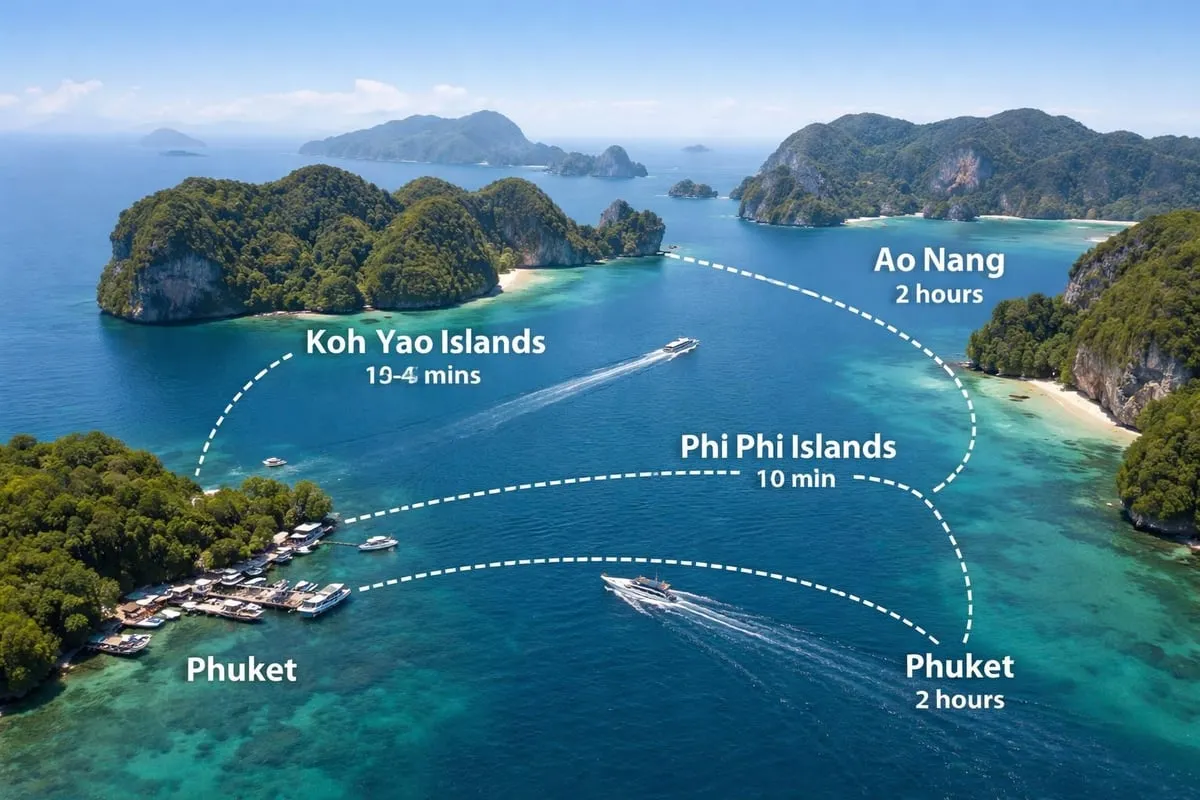
The famous Phi Phi Islands sit roughly between Phuket and Ao Nang, making them a logical stopover. You can catch a morning ferry from Phuket to Phi Phi, spend a day or two exploring, then continue to Ao Nang.
Ferries run frequently between Phuket and Phi Phi, and from Phi Phi to Ao Nang. The journey splits into manageable segments:
Phuket to Phi Phi: 2 hours Phi Phi to Ao Nang: 1-1.5 hours
This route works beautifully if you want to see more of the region without backtracking.
Via Koh Yao Islands
For travelers seeking something quieter, the Koh Yao islands offer a peaceful alternative route. These lesser-known islands provide authentic Thai island experiences without the crowds.
| Route Option | Total Travel Time | Highlights | Best For |
|---|---|---|---|
| Direct Ferry | 2-3 hours | Simple, economical | Budget travelers |
| Via Phi Phi | 2+ days recommended | Iconic scenery, snorkeling | First-timers |
| Via Koh Yao | 1-2 days recommended | Quiet beaches, local culture | Repeat visitors |
| Speedboat Direct | 1-1.5 hours | Speed, efficiency | Business travelers |
Practical Tips for a Smooth Journey
After helping countless travelers navigate Thai ferry systems, here are the insider tips that actually make a difference.
Packing for the Ferry
What to bring:
- Sunscreen (reapply regularly, the Andaman sun is intense)
- Light jacket or shawl (air conditioning can be aggressive)
- Seasickness medication if you’re prone (even calm seas can affect some people)
- Water bottle (hydration matters in tropical heat)
- Entertainment (book, downloaded shows, music)
- Waterproof bag for electronics
What to avoid:
- Large, hard-sided luggage (soft bags are easier)
- Excessive valuables (keep it simple)
- Heavy meals right before departure (trust us on this)
Seasickness Management
Even if you’ve never experienced motion sickness before, boat travel in tropical waters can surprise you. The Andaman Sea is generally calm during high season, but conditions vary.
Prevention strategies:
- Take medication 30-60 minutes before departure
- Sit in the middle of the boat (less motion)
- Face forward when seated
- Focus on the horizon when on deck
- Stay hydrated but avoid alcohol
- Eat light, bland foods beforehand
Most ferries stock basic motion sickness bags, but bringing your own medication is smarter.
Cost Breakdown and Budgeting
Let’s talk money. The phuket to ao nang ferry costs vary significantly based on season, operator, and booking timing.
Standard Pricing (2026)
Ferry tickets:
- Low season: 400-500 THB per person
- High season: 600-700 THB per person
- Speedboat: 800-1,500 THB per person
- Private charter: 8,000-15,000 THB (split among group)
Additional costs to consider:
- Transfer to/from pier: 300-600 THB each way
- Luggage fees: Usually included, but oversized bags may incur charges (100-200 THB)
- Onboard refreshments: 50-150 THB
- Insurance: Optional, 100-200 THB
Combination van-and-ferry packages often provide better value than booking segments separately. The convenience factor alone justifies the typically modest price difference.
Understanding Ferry Operators
Not all ferry services are identical. Different operators maintain varying standards, schedules, and vessel types.
Major Operators on This Route
Researching Thailand’s boat operators helps set realistic expectations. Companies operating the Phuket-Ao Nang route include established names with solid safety records.
What separates operators:
- Vessel condition (newer boats = more comfort)
- Departure punctuality (some are consistently better)
- Customer service (English-speaking staff availability)
- Onboard amenities (air conditioning, toilets, snack bars)
- Safety equipment (life jackets, emergency procedures)
Reading recent reviews on booking platforms provides current insights. Ferry conditions and service quality can change, so prioritize recent feedback over years-old reviews.
Seasonal Considerations and Best Times to Travel
Timing your phuket to ao nang ferry journey around seasons dramatically affects your experience.
High Season (November - March)
This is peak travel time for Southern Thailand. Expect:
Pros:
- Calm seas and reliable weather
- Maximum ferry frequency
- All operators running full schedules
- Best conditions for photography
Cons:
- Higher prices across the board
- Crowded boats and piers
- Advance booking essential
- Accommodation costs peak
Shoulder Season (April - May, October)
These transition months offer interesting trade-offs.
April-May:
- Still decent weather early in the period
- Prices starting to drop
- Fewer tourists
- Increasing heat and humidity
October:
- Monsoon winding down
- Variable weather patterns
- Significant price discounts
- Services resuming after low season
Low Season (June - September)
The monsoon months bring challenges but also opportunities for adventurous travelers.
Many ferry services reduce frequency or suspend operations entirely. When boats do run, rough seas are common. However, for travelers with flexible schedules, the dramatically lower prices and empty beaches can be appealing.
If traveling during this period, always have backup plans and avoid tight connections to flights or other commitments.
Making Connections to Other Destinations
Ao Nang serves as an excellent hub for exploring Krabi Province and beyond. Understanding onward connections helps plan comprehensive itineraries.
From Ao Nang to Railay Beach
Railay Beach, accessible only by boat, sits just 15 minutes from Ao Nang. Longtail boats depart regularly from Ao Nang Beach, making this an easy add-on to your journey.
Exploring Krabi’s Islands
Ao Nang provides access to stunning islands including:
- Koh Poda (great snorkeling)
- Chicken Island (iconic limestone formation)
- Koh Hong (lagoon swimming)
- Four Islands Tour (popular day trip)
Many operators offer island-hopping tours directly from Ao Nang, making it simple to extend your adventure after arriving from Phuket. Thailand’s island experiences showcase the variety available throughout the region.
Continuing to Other Southern Thailand Destinations
Ao Nang’s central location makes it a strategic base for exploring Southern Thailand:
Northbound:
- Koh Lanta (1-2 hours by ferry)
- Koh Phi Phi (1 hour by speedboat)
- Back to Phuket
Southbound:
- Koh Lipe (requires transfer through multiple points)
- Trang islands
Inland:
- Krabi Town (30 minutes by van)
- Tiger Cave Temple
- Hot springs and emerald pools
Planning these connections when booking your initial phuket to ao nang ferry saves time and stress. Many booking platforms, including specialized services focusing on Thailand’s destinations, help coordinate multi-leg journeys.
Safety and Travel Insurance
Let’s address something many travelers overlook until it’s too late: safety and insurance considerations for ferry travel.
Ferry Safety Standards
Thai ferry operators must meet safety regulations, but enforcement quality varies. Reputable operators maintain modern vessels with:
- Life jackets for all passengers (stored in accessible locations)
- Trained crew members (familiar with emergency procedures)
- Weather monitoring systems (to avoid dangerous conditions)
- Communication equipment (for emergency situations)
- Regular vessel maintenance (documented inspection records)
Before boarding, locate life jackets and emergency exits. It takes 30 seconds and provides peace of mind.
Travel Insurance Coverage
Standard travel insurance policies vary in ferry coverage. Verify your policy includes:
- Medical evacuation from remote islands
- Trip interruption for weather cancellations
- Missed connections if ferries are delayed
- Baggage coverage during water transport
- Activity coverage for boat travel specifically
Some budget policies exclude water transport entirely. Reading the fine print before your trip beats discovering coverage gaps during an emergency.
Cultural Etiquette on Thai Ferries
Respecting local customs makes everyone’s journey more pleasant. Thai ferry travel has unwritten rules worth knowing.
Boarding and Seating
Thais generally board patiently without rushing or pushing. Following this relaxed approach rather than fighting for first-on helps everyone.
Removing shoes before entering certain cabin areas shows respect (look for shoes lined up near entrances as a clue). Monks receive priority seating, and women shouldn’t sit directly next to monks.
Noise and Behavior
Keep voices moderate. While ferries aren’t libraries, Thai culture values keeping “cool hearts” (jai yen). Loud conversations, aggressive behavior, or public displays of frustration are considered poor form.
Phone calls are fine but keep volume reasonable. Playing music or videos without headphones is inconsiderate everywhere, but especially in Thailand’s communal travel environment.
Tipping and Gratuities
Tipping isn’t expected on ferries, but small tips for exceptional service (crew helping with heavy bags, going above and beyond) are appreciated. A 20-50 THB tip for someone who really helped is generous without being excessive.
Getting from Phuket to Ao Nang involves more options than you might expect, from direct ferries and speedboats to creative island-hopping routes that turn simple transportation into memorable adventures. Whether you prioritize speed, budget, or scenic experiences, planning ahead and understanding your choices makes all the difference. Ready to book your journey? Thailand Boat Tickets makes the entire process simple through their AI-powered platform, where you can message via WhatsApp, Instagram, Facebook, Telegram, LINE, or their website to get real-time schedules, compare prices, and secure tickets across all major ferry operators in Southern Thailand. Their multilingual service connects you directly with trusted boat operators, taking the guesswork out of island hopping.
Chat with our VTA and go to Thailand
Get instant access to live ferry schedules, compare prices across all operators, and book your tickets directly with our Virtual Ticket Assistant.