

Quick links
- Koh Phi Phi
- All Koh Phi Phi timetables
- Phuket to Koh Phi Phi timetable
- Krabi to Koh Phi Phi timetable
Planning your journey to one of Thailand’s most breathtaking destinations requires understanding the ferry network that connects these limestone paradises to the mainland. The phi phi island ferry service operates year-round, providing essential transportation links between major hubs like Phuket, Krabi, and the island archipelago itself. Whether you’re a first-time visitor or a returning traveler, navigating the various routes, schedules, and booking options can significantly impact your travel experience. This comprehensive guide breaks down everything you need to know about ferry services to and from Phi Phi Island in 2026.
Understanding Phi Phi Island Ferry Routes
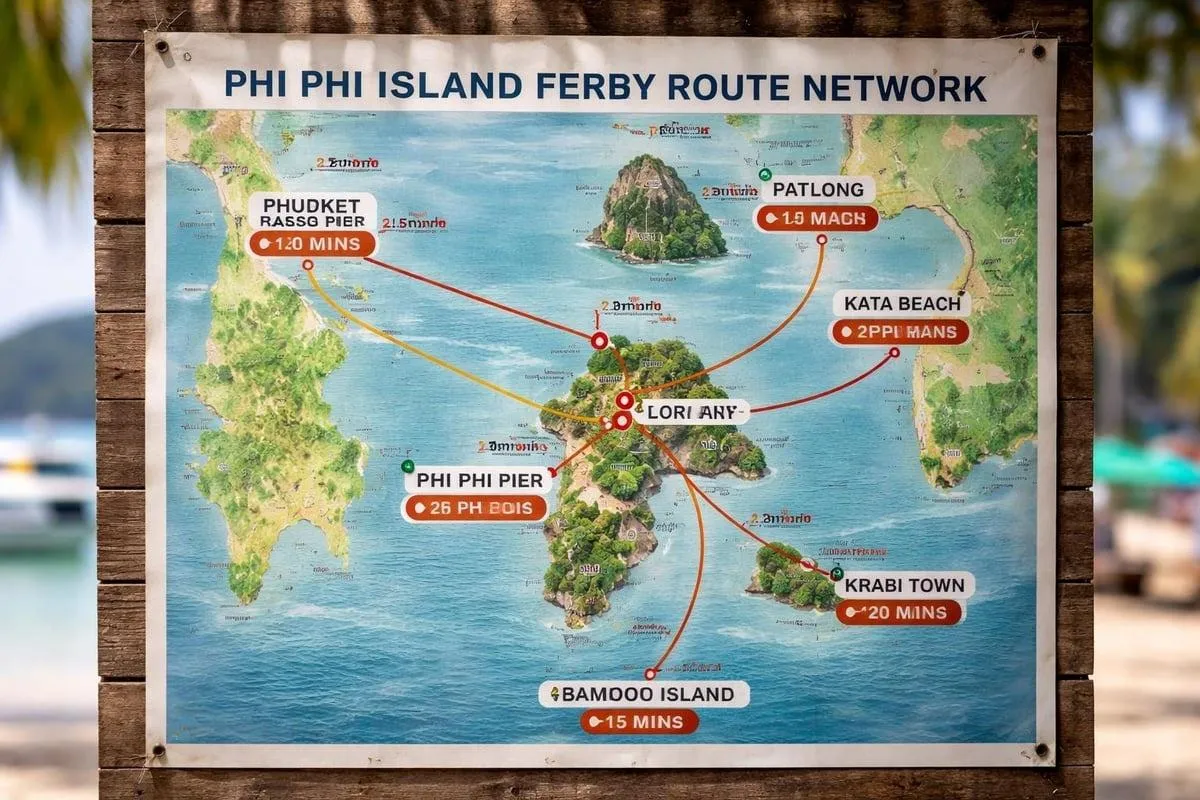
The phi phi island ferry network operates from multiple departure points across the Andaman coast. Most travelers access the islands from either Phuket’s Rassada Pier or various piers in Krabi province, creating a well-connected transportation system that serves thousands of passengers daily.
Primary Departure Points and Connections
Phuket serves as the primary gateway for international travelers, with Rassada Pier offering regular departures throughout the day. The journey typically takes between 1.5 to 2 hours depending on sea conditions and vessel type. Krabi provides several departure options, including ferry services from Krabi’s various piers that offer shorter crossing times of approximately 90 minutes.
Major routes include:
- Phuket Rassada Pier to Tonsai Pier (Phi Phi Don)
- Krabi Klong Jilad Pier to Tonsai Pier
- Ao Nang Beach to Tonsai Pier
- Phi Phi to Koh Lanta connections
- Inter-island transfers between Phi Phi Don and Phi Phi Leh
The Tonsai Pier on Phi Phi Don serves as the main arrival point for most ferry services. From here, travelers can access various parts of the island or arrange onward connections to other destinations.
Ferry Operators and Service Types
Multiple operators provide phi phi island ferry services, each offering different vessel types, amenities, and pricing structures. Understanding these differences helps travelers select the option that best matches their schedule and comfort preferences.
Standard Ferry vs. Speedboat Services
| Service Type | Journey Time | Capacity | Price Range | Best For |
|---|---|---|---|---|
| Standard Ferry | 2-2.5 hours | 200-300 passengers | 350-500 THB | Budget travelers, groups |
| Express Ferry | 1.5-2 hours | 150-200 passengers | 500-700 THB | Balance of cost and speed |
| Speedboat | 45-90 minutes | 20-40 passengers | 1,200-2,500 THB | Time-sensitive travelers |
| Private Charter | 45-60 minutes | 6-15 passengers | 8,000-15,000 THB | Luxury travelers, families |
Standard ferries operate on fixed schedules with multiple departures daily, particularly during high season from November through April. These vessels provide basic seating, restrooms, and sometimes air-conditioning in designated sections. Express ferries reduce journey time slightly while maintaining reasonable pricing, making them popular among backpackers and mid-range travelers.
Speedboats offer significantly faster crossings but come with higher costs and more exposure to sea conditions. These services work well for travelers with tight schedules or those prone to seasickness who prefer shorter water time. Thailand Boat Tickets’ AI booking service allows passengers to compare all available options across different operators in real-time.
Seasonal Schedules and Timing Considerations
Ferry schedules vary dramatically between high and low seasons, with weather patterns playing a crucial role in service availability and reliability. The phi phi island ferry system operates year-round, but travelers should understand seasonal variations when planning their trips.
High Season Operations (November - April)
During peak tourist months, operators run maximum schedules with departures as frequent as every hour during daylight hours. Morning ferries typically begin around 8:00 AM, with the last departures leaving mainland piers around 3:00 PM. Ferry schedules from Rassada Pier provide detailed departure times for Phuket-based services throughout this period.
The advantage of high season travel includes more flexibility in timing, reduced cancellation risks, and calmer seas. However, boats fill quickly, and advance booking becomes essential to secure preferred departure times.
Low Season Adaptations (May - October)
Monsoon conditions reduce ferry frequencies, with some operators suspending speedboat services during particularly rough weather periods. Standard ferries continue operating but may experience delays or cancellations during severe weather. Travelers during these months should build flexibility into their itineraries and consider booking refundable tickets when possible.
Low season considerations:
- Reduced departure frequencies (typically 2-4 daily)
- Higher cancellation probability due to weather
- Longer potential delays at piers
- Lower passenger volumes creating more comfortable journeys
- Significantly discounted fares compared to peak season
Booking Strategies and Pricing Optimization
Securing the best phi phi island ferry tickets requires understanding pricing dynamics, booking windows, and where to find authentic operators. The market includes numerous resellers, direct operators, and aggregation platforms, each with different pricing structures and service levels.
Advance Booking vs. Walk-Up Purchases
Advance booking provides price advantages and schedule guarantees, particularly during high season when ferries regularly sell out. Most operators offer online booking between 7-90 days before departure, with early bird discounts available for bookings made 30+ days in advance. Walk-up purchases remain possible during low season but risk limited availability and higher last-minute pricing.
Modern booking platforms like Thailand Boat Tickets streamline the process through messaging apps, allowing travelers to book via WhatsApp, Instagram, Messenger, or Telegram with support in multiple languages. This approach eliminates the need to navigate multiple operator websites or deal with pier-side touts.

Price Comparison Across Operators
Ferry pricing fluctuates based on operator, season, vessel type, and booking channel. Standard routes from Phuket to Phi Phi range from 350-700 THB for economy class on regular ferries, while premium speedboat services command 1,200-2,500 THB per person. The ability to compare ferry operators and routes becomes invaluable when optimizing both cost and convenience.
| Route | Economy Ferry | Express Ferry | Speedboat | Average Journey Time |
|---|---|---|---|---|
| Phuket - Phi Phi | 350-450 THB | 500-650 THB | 1,200-1,800 THB | 90-120 minutes |
| Krabi - Phi Phi | 300-400 THB | 450-600 THB | 1,000-1,500 THB | 75-100 minutes |
| Phi Phi - Lanta | 350-500 THB | 550-700 THB | 1,400-2,000 THB | 60-90 minutes |
| Ao Nang - Phi Phi | 350-450 THB | 500-650 THB | 1,200-1,600 THB | 60-90 minutes |
Group bookings often qualify for discounts of 10-20% when purchasing four or more tickets simultaneously. Children under certain ages may receive reduced fares or travel free, though policies vary by operator.
Departure Pier Logistics and Arrival Procedures
Understanding pier locations, check-in procedures, and arrival logistics prevents common travel frustrations associated with phi phi island ferry services. Each departure point has unique characteristics and requirements that travelers should anticipate.
Mainland Pier Procedures
Rassada Pier in Phuket requires travelers to arrive 45-60 minutes before scheduled departure for check-in, ticket verification, and boarding. The pier complex includes waiting areas, food vendors, baggage storage, and tourist information services. Transportation from Phuket Town or beach areas typically takes 10-30 minutes depending on traffic conditions.
Krabi’s multiple pier options include Klong Jilad Pier and the closer Ao Nang departure points, each serving different operators and vessel types. Check-in times mirror Phuket requirements, though smaller piers may have more relaxed procedures during low season.
Essential departure day checklist:
- Arrive 45-60 minutes before scheduled departure
- Bring printed or digital ticket confirmation
- Have passport or ID available for verification
- Prepare cash for pier fees if not included in ticket price
- Secure luggage appropriately for sea conditions
- Confirm actual departure pier location within booking confirmation
Tonsai Pier Arrival Experience
Upon arrival at Tonsai Pier on Phi Phi Island, passengers disembark into the island’s central hub where long-tail boats, hotel transfers, and porter services await. The pier area can be chaotic during peak arrival times when multiple ferries dock simultaneously.
Hotels on the quieter beaches often arrange complimentary or paid transfers via long-tail boat from Tonsai Pier. These transfers should be arranged in advance, with many resorts requesting ferry arrival details to coordinate pickup timing. Travelers staying in Tonsai Village can walk to accommodations within 5-15 minutes, though porter services assist with heavy luggage for reasonable fees.
Multi-Destination Island Hopping Routes
The phi phi island ferry network integrates with broader Andaman Sea routes, enabling efficient island-hopping itineraries that combine multiple destinations in single trips. Strategic route planning maximizes time efficiency while minimizing transportation costs.
Integrated Route Options
Beyond direct mainland connections, ferries operate between Phi Phi and other island destinations including Koh Lanta, Koh Kradan, and even Koh Tao through multi-leg journeys. These routes allow travelers to explore Thailand’s diverse island landscapes without returning to mainland departure points.
The ferry services between Phi Phi and Koh Kradan operate seasonally, providing access to lesser-known islands with pristine beaches and exceptional diving sites. Combined tickets often offer better value than purchasing separate single-route passages.
Popular island-hopping combinations:
- Phuket → Phi Phi → Koh Lanta → Krabi
- Krabi → Phi Phi → Phi Phi Leh day tour → Return
- Phi Phi → Bamboo Island → Mosquito Island circuit
- Ao Nang → Phi Phi → Railay Beach → Ao Nang
Multi-leg bookings through messaging platforms simplify complex itineraries by coordinating schedules across different operators and ensuring compatible connection times. This approach proves particularly valuable when planning week-long island exploration trips.

Special Transfers and Premium Services
Beyond standard ferry operations, specialized transfer services cater to travelers seeking enhanced comfort, privacy, or specific timing requirements. These phi phi island ferry alternatives command premium pricing but deliver corresponding value through convenience and experience quality.
Private Speedboat Charters
Private speedboat transfer options allow groups to customize departure times, routes, and onboard amenities. Charter services accommodate 6-15 passengers depending on vessel size, making them cost-effective for families or small groups when per-person costs are calculated.
Charters provide direct hotel-to-hotel service, eliminating the need for taxi transfers to public piers and reducing total journey time significantly. Operators offer flexible scheduling outside standard ferry timetables, beneficial for travelers with early morning flights or late arrivals who miss regular departures.
Resort-Specific Transfer Services
High-end resorts on Phi Phi’s quieter beaches operate private ferry services for guests, often included in accommodation packages or available as paid add-ons. These transfers provide seamless arrival experiences with resort staff handling luggage, refreshments during crossing, and direct beach delivery.
Premium services justify higher costs through superior comfort, reduced crowding, and integrated service from mainland hotels through to final resort check-in. The time savings and stress reduction appeal particularly to honeymooners, families with young children, and luxury-focused travelers.
Luggage Policies and Baggage Handling
Understanding baggage allowances and handling procedures prevents unexpected fees and logistical complications when using phi phi island ferry services. Different operators enforce varying policies regarding weight limits, oversized items, and specialty equipment.
Standard Allowances and Restrictions
Most ferry operators permit one checked bag up to 20kg plus one carry-on item per passenger within standard ticket pricing. Excess baggage incurs additional fees ranging from 50-200 THB per item depending on size and weight. Diving equipment, surfboards, and bicycles typically require advance notification and supplementary charges.
Common baggage guidelines:
- Standard allowance: 20kg checked + 7kg carry-on
- Excess baggage fee: 50-100 THB per additional item
- Oversized equipment: 100-300 THB surcharge
- Fragile items: Passenger responsibility, limited liability
- Prohibited items: Flammable materials, weapons, durian fruit
Travelers should secure valuables and electronics in carry-on bags rather than checked luggage, as baggage handling at piers can be rough and theft occasionally occurs. Waterproof bags protect belongings from spray and rain during crossings, particularly on speedboats and during monsoon season.
Terminal Baggage Services
Major piers offer left luggage services for travelers arriving early or departing late who wish to explore without bags. Rates typically range from 50-100 THB per bag for 24-hour periods. These services prove valuable for travelers with early morning ferry arrivals who cannot check into hotels until afternoon.
Porter services at Tonsai Pier assist with transporting luggage from ferry to accommodation, particularly beneficial given the lack of vehicle access on most Phi Phi beaches. Negotiating fair rates before service prevents inflated tourist pricing, with standard fees running 50-100 THB per bag depending on distance.
Safety Considerations and Weather Awareness
Operating in open ocean conditions, phi phi island ferry services face various safety challenges that travelers should understand and prepare for appropriately. While modern vessels maintain strong safety records, awareness of protocols and precautions enhances security and comfort.
Vessel Safety Standards and Equipment
Licensed ferry operators must meet Thai maritime safety regulations including life jacket availability, emergency equipment, and crew training certifications. Passengers should verify life jacket locations upon boarding and listen attentively to safety briefings, which are often abbreviated or delivered only in Thai.
Reputable operators maintain vessels to international standards with regular inspections and maintenance schedules. However, older boats occasionally operate with minimal safety equipment, making operator selection important. Booking through verified platforms with operator vetting processes provides additional assurance of safety compliance.
Weather Monitoring and Cancellation Protocols
Monsoon conditions from May through October increase wave heights and create potentially dangerous crossing conditions. Operators monitor weather forecasts closely and cancel services when conditions exceed safe operating parameters. While frustrating for travelers, these cancellations prioritize passenger safety and should be respected.
Travelers should maintain flexible itineraries during monsoon season and consider travel insurance covering weather-related delays and cancellations. Alternative accommodation costs and rebooking fees can accumulate quickly when ferries suspend operations for multiple consecutive days.
Digital Booking Technologies and Customer Support
The evolution of ferry booking systems has transformed how travelers secure phi phi island ferry tickets, with mobile-first platforms and AI-powered assistance replacing traditional travel agency models. These technologies deliver enhanced convenience while maintaining personalized support.
AI-Powered Booking Assistants
Modern booking platforms employ conversational AI that processes natural language requests through messaging apps, checking real-time availability across multiple operators simultaneously. Travelers can ask questions, compare options, and complete bookings entirely within familiar chat interfaces like WhatsApp or Instagram DM.
This technology eliminates language barriers through multilingual support and provides instant responses regardless of time zones or business hours. The AI handles complex multi-leg itineraries that would require extensive phone calls or email exchanges through traditional booking channels.
Human Expert Backup and Verification
While AI handles routine inquiries and standard bookings efficiently, human travel experts remain available for complex situations, special requests, and problem resolution. This hybrid model combines automation efficiency with experienced judgment for challenging scenarios like last-minute changes or weather-related disruptions.
Premium support services verify ferry reliability, operator reputation, and route suitability based on current conditions rather than relying solely on published schedules. This expertise proves invaluable when navigating the difference between theoretical ferry times and actual operational reality during variable weather periods.
Payment Methods and Currency Considerations
International travelers booking phi phi island ferry services need convenient payment options that accommodate various currencies and card types without excessive fees. Understanding available methods and associated costs optimizes the booking transaction experience.
Accepted Payment Options
Modern booking platforms accept major credit cards (Visa, Mastercard, American Express), debit cards, PayPal, and various regional payment methods popular in Asian markets. Some traditional operators at piers only accept Thai Baht cash, creating challenges for travelers without local currency access.
Online booking eliminates currency exchange complications by processing transactions in traveler home currencies with transparent conversion rates. This approach avoids unfavorable pier-side exchange rates and the inconvenience of carrying large cash amounts.
Payment considerations:
- Credit cards widely accepted online, limited at piers
- Cash required for some walk-up purchases (Thai Baht only)
- Exchange rates more favorable through online booking
- Transaction fees vary by payment method and platform
- Refund processing times range from immediate to 14 days
Refund and Change Policies
Ferry ticket flexibility varies significantly by operator, fare type, and booking timing. Economy tickets often carry strict no-refund policies, while premium fares allow changes for fees of 100-300 THB per ticket. Understanding these policies before purchase prevents frustration when schedule modifications become necessary.
Weather-related cancellations initiated by operators typically result in full refunds or complimentary rebooking, though processing timelines vary. Passenger-initiated cancellations face penalties ranging from partial refunds to complete forfeiture depending on advance notice provided and operator terms.
Environmental Impact and Sustainable Travel
The increasing phi phi island ferry traffic raises environmental concerns regarding marine ecosystem impacts, fuel consumption, and coastal degradation. Conscious travelers can make choices that minimize ecological footprints while still accessing these beautiful destinations.
Eco-Friendly Operator Selection
Some ferry companies invest in cleaner fuel technologies, waste management systems, and marine conservation partnerships that reduce environmental damage. These operators may charge slight premiums but deliver measurable sustainability benefits through reduced emissions and pollution prevention.
Choosing larger ferries over multiple speedboat trips concentrates passenger loads into fewer vessel movements, reducing total fuel consumption and wake impact on coastal areas. While speedboats offer convenience, their environmental cost per passenger significantly exceeds standard ferry alternatives.
Responsible Tourism Practices
Travelers can support sustainable phi phi island ferry operations by avoiding single-use plastics, properly disposing of waste, and respecting marine life during crossings. Many operators now prohibit littering with enforced fines, reflecting growing environmental awareness within the industry.
Supporting businesses that contribute to reef restoration, beach cleanup initiatives, and local environmental programs ensures tourism revenues benefit long-term ecosystem health. Simple choices like refusing plastic water bottles and bringing reusable containers create cumulative positive impacts when adopted broadly.
Successfully navigating the phi phi island ferry system requires understanding routes, timing, operators, and booking strategies that align with your travel style and budget. Whether you prioritize speed, cost, comfort, or environmental responsibility, numerous options exist to connect you with these spectacular islands. For seamless booking across all Thailand ferry routes with AI-powered assistance, multilingual support, and worldwide payment options, Thailand Boat Tickets simplifies your entire journey planning process through convenient messaging platforms you already use daily.
Chat with our VTA and go to Thailand
Get instant access to live ferry schedules, compare prices across all operators, and book your tickets directly with our Virtual Ticket Assistant.